Introduction to Olympic Curling and Its Mechanics
Curling is a precision sport, known for its unique combination of strategy, skill, and teamwork. It involves two teams, each comprising four players, who take turns sliding stones on a rectangular sheet of ice towards a target area known as the “house.” The primary objective is to accumulate points by placing stones as close as possible to the center of the house, all while maneuvering against the opposing team’s stones. The game is played in a series of rounds known as “ends,” with each team delivering eight stones per end.
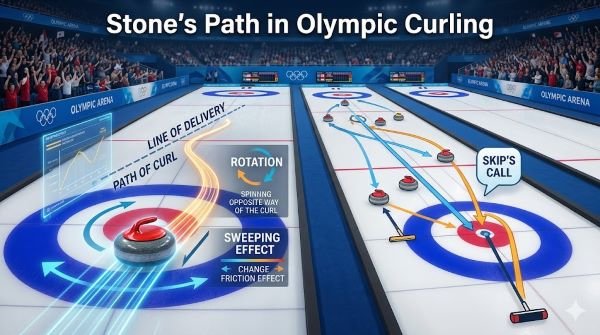
The mechanics of curling are fascinating, as they hinge significantly on the delivery of the stone. Each stone, made from granite and weighing approximately 44 pounds, is uniquely designed with a slight curvature known as “curl.” Players deliver stones with a specific rotation, allowing them to change direction as they travel down the sheet, influenced by the friction of the ice. The path a stone takes is not only a factor of its initial speed and release angle but also the physical characteristics of the ice surface and any applied brushing.
Brushing, or sweeping, serves a critical role in gameplay; it affects the stone’s path by creating a thin layer of water on the ice’s surface, reducing friction and enabling the stone to travel farther. This introduces a fascinating dynamic where skilled players can affect the trajectory and distance of the stone with precise strokes. Therefore, it is essential for players to be adept at both delivering the stone and using brushes effectively to manipulate the conditions of play. Understanding how brushes affect the stone’s path in Olympic curling is central to strategizing and succeeding in this intricate and contemplative sport.
The Role of Brushes in Curling
In the sport of curling, brushes play a pivotal role in influencing the stone’s path after it has been released. Players utilize these tools strategically, grasping the importance of managing friction and momentum to achieve optimal trajectory. The primary purpose of a curling brush is to sweep the ice in front of the moving stone, which, in turn, affects both its speed and direction.
The technique of sweeping helps to reduce the amount of friction between the stone and the ice. When brushes come into contact with the ice, they warm the surface slightly, creating a thin layer of water that facilitates smoother travel for the stone. Consequently, by adjusting the intensity and speed of sweeping, players can significantly modify the stone’s path, allowing for precision control during the game. This crucial adjustment mechanism is essential given the intricate nature of curling where minor deviations can greatly impact results.
Furthermore, the design and material of curling brushes play an essential role in their effectiveness. Modern curling brushes often consist of a durable handle and a head made from a combination of synthetic fibers or more traditional materials. This design allows for better control and efficiency when sweeping. The choice of materials influences how well the brush can glide over the ice and how effectively it can generate heat, which in turn affects friction levels.
As players practice and refine their techniques, they develop an understanding of how brushes affect the stone’s path. Each player may adopt different sweeping methods based on their style and strategy, but the fundamental mechanics remain consistent across the sport. This synergy between the brush, the player, and the stone illustrates the intricate relationship that exists within the precision-driven sport of curling.
Research and Expert Opinions on Brush Impact
Curling, often described as a sport of finesse and strategy, has garnered considerable interest around the role of brushes in modifying the path of the stone. Numerous studies conducted by curling researchers have focused on comprehending how these tools influence curling dynamics. Notably, the friction generated by brushes can significantly affect the stone’s trajectory, particularly when it comes to its speed and curl. Researchers have employed high-speed cameras and simulation technologies to analyze the stone’s movement as it encounters varying brush techniques. The consensus among these studies indicates that sweeping not only reduces the friction between the stone and the ice but also enhances distance traveled. This crucial understanding raises the question: do brushes affect the stone’s path in Olympic curling?
Expert opinions from seasoned curling coaches and professional players further support the findings of scientific research. Many coaches emphasize the necessity of mastering sweeping techniques to optimize performance during matches. These professionals assert that effective brushing can alter the stone’s path, thus providing an advantage in a competitive setting. For example, adjustments made through proper sweeping can maximize the distance a stone travels, allowing for strategic placements that increase the likelihood of scoring.
Despite these advancements in knowledge, several misconceptions regarding the role of brushes persist among amateur players and spectators. A common belief is that brushing is merely about speed; however, experts clarify that the angle, pressure, and technique employed during sweeping are equally important. Technology continues to contribute to debunking these misconceptions. Modern advancements in brushing materials and designs have led to more effective tools, optimizing the influence a brush can have on the stone’s path in Olympic curling. Overall, a comprehensive understanding of these dynamics enriches both players’ approaches and fans’ appreciation of the intricacies involved in the sport.
Conclusion: The Significance of Brushes in Olympic Curling Strategy
In the realm of Olympic curling, the role of brushes cannot be overstated. The technique used by the players not only affects the stone’s immediate path but also plays a crucial role in shaping strategies employed by curling teams. Brushes are vital tools that allow teams to manipulate the trajectory and speed of the stones, yet their precise influence on the stone’s path is often underestimated.
Research and practical applications have indicated that effective brushing can reduce friction between the stone and the ice, thereby increasing the stone’s travel distance while potentially altering its trajectory. This interaction highlights the essential nature of understanding how do brushes affect the stone’s path in Olympic curling. By comprehending this relationship, players develop skills that leverage brushing techniques to maximize the efficacy of their shots during competitions.
Furthermore, teams that prioritize brush mastery can enhance their overall performance. This requires not only intensive practice but also strategic training, focusing on synchronization between the skip and the brushers, ensuring both are aligned in their objectives for each shot. Teams that effectively incorporate brushing into their game strategies often find themselves with a competitive advantage, as they can execute complex plays that manipulate the stone’s path with precision.
The integration of brushes into overall curling strategy emphasizes the necessity for both experienced and novice players to invest time in honing their brushing skills. By recognizing the substantial impact that brushes have on the stone’s path, teams can refine their techniques and optimize their gameplay for success on the Olympic stage. This knowledge ultimately bridges the gap between individual performance and effective teamwork in the sport.